
Nature Recovery for Landscape Resilience
2026 Landscape Ecology UK Conference
7-9 July, University of Manchester, UK
Scope and Theme
Resilience is critical for future landscapes and the human and ecological communities that they support. Addressing the coupled ecological and climate crises requires the restoration of natural processes at multiple scales. Proposed solutions must therefore improve the resilience of landscapes to a range of interacting stressors.
Current advances in landscape ecology are building landscape resilience against multiple threats including increased risk of flooding, drought, heat stress, habitat loss and intensive land-use.
This international conference will showcase new insights, methods and interventions that are making progress towards reversing biodiversity decline, restoring ecosystem functioning and the enhanced provision of ecosystem services at the landscape scale.
Conference speakers will report on the latest developments in habitat restoration, local and national government policy, and understanding the drivers of change that affect landscape resilience.
Audience
We aim to bring together people from across science, policy, conservation, finance and industry, to learn and share approaches to monitor and report ecosystem recovery. This multidisciplinary conference will appeal to anyone with an interest in landscape restoration, impacts of anthropogenic disturbance on landscapes, nature-based solutions to climate change, and natural capital markets.
Programme
The conference will take place on the 7th and 8th of July in the Core Technology Facility at the University of Manchester (6 Grafton St, Manchester, M13 9WU), followed by fieldtrips on 9th July.
Landscape Ecology UK Conference 2026 Programme
Find the full book of abstracts here.
Day 1 (7th July)
09:00 – WELCOME
09:15 – Keynote 1: Andrea Drewitt (Mersey Gateway Environmental Trust)
Session 1: Policy & Practice
09:45: Tim Graham – RSK Wilding (et al.): The Need for Ecological Restoration Guidance: Large Scale Nature Recovery and Restoration
10:00: Tim Graham – RSK Wilding: Application of Conservation Covenants as a new tool to enable large scale nature recovery
10:15: Sofie Swindlehurst – LUC: Activating the LWS Network – from single sites to a functional network
10:30: Michael Image – AtkinsRéalis (et al.): Valuing nature to enhance the resilience of railway infrastructure in landscapes. Practical applications of the new ECOV4R framework.
10:45 (flash talk): Molly Tuckey - Newcastle University (et al.): Evaluating the establishment, survival and health of trees in non-woodland contexts and assessing impact of biodiversity funding schemes as incentives for better practice in planting, maintenance and monitoring.
10:50 (flash talk): Vanessa Burton - Forestry England: Creating nature networks in England
Session 2: Biodiversity Trends & Indicators
11:30: Caroline Bailey-Rothschild - Manchester Metropolitan University (et al.): Measuring resilience using bright and hot spot analyses of biodiversity
11:45: Chloe Bellamy - Forest Research (et al.): Tracking forest biodiversity potential at scale using the Forest Biodiversity Index (FBI)
12:00: Chris Panter – Footprint Ecology (et al.): Using the Biodiversity Conservation Assessment approach to apply Forest Wilding Interventions
12:15: Caitlin Lewis – Forest Research (et al.): Thirty years of monitoring reveal management decisions shaped ground vegetation communities more than wider environmental change in a temperate forest landscape
12:30: Gerd Lupp – Technical University of Munich (et al.): Co-creating indicators for assessing the socio-political and socio-cultural dimensions of nature-based solutions in a restoration ecology framework
12:45: LUNCH & POSTERS*
13:45 - Keynote 2: Dagmar Haase (Humboldt University and Helmholtz Centre for Environmental Research – UFZ)
Session 3: People and Nature
14:15: Thuy Hang Le – University of Hildesheim (et al.): Traditional agroforestry systems in Europe revisited: a systematic review
14:30: Emma Stockley – Forestry England: Cultural resilience in nature recovery: integrating historic environment advice into landscape-scale woodland creation
14:45: Ian Thornhill – University of Manchester: The value of visiting wild spaces for mitigating shifting baseline syndrome
15:00: Andrew Irving – University of Edinburgh (et al.): Whose voices shape resilient nature recovery? Representativeness and community benefit expectations at Bunloit Estate, Scotland
15:15 (flash talk): Lucy Jenkins FLI, Camlins Landscape Architects: Integrating Resilience: the role of Inter-disciplinary Design
15:20 (flash talk): Zenzo Sibanda – King’s College London: Re-centring taboos and mythology for landscape-scale socio-ecological resilience in Driefontein Grasslands, Zimbabwe
15:30: BREAK
Session 4: Modelling
16:00: Joby Hart - University of Manchester: Using agent-based modelling to simulate landscape-level beaver expansion, how this will affect the landscape and assess the resultant change in landscape connectivity for water voles and American mink
16:15: Guilherme Castro – Royal Holloway University of London and Royal Botanic Gardens Kew : Linking vegetation structural complexity and ecosystem resistance at the landscape scale under a changing climate
16:30: Kirsty Watkinson – University of Manchester (et al.): Predicting Lyme Disease Risk Under Scenarios of Landscape Change: An Agent-based Approach
16:45: Fiona Plenderleith – Forest Research (et al.): Mapping, expanding & assessing Britain’s Temperate Rainforests
17:15 CLOSE
19:00 - Conference Dinner - Venue: Zouk (5, The Quadrangle, Chester St, Manchester M1 5QS)
Day 2 (8th July)
9:00 – WELCOME
9:30: Keynote 3: Matthew Freeman (Lancashire and Merseyside Wildlife Trust)
Session 5: Indicators
10:00: Jess Neuman – University of Reading (et al.): Citizen science and partnership working for river recovery at a landscape scale
10:15: Bridgett Emmett – UK Centre for Ecology & Hydrology (et al.): National Indicators and Targets for Ecosystem Health and Resilience
10:30: Miriam Dobson & Daniel Turner – Natural England (et al.): Mitigating nature-related risks by restoring ecosystem function
10:45: Alice Gottesman – Rainforest Alliance (et al.): From Indicators to Interactions: Systems Analysis for Landscape Resilience
11:00: BREAK
Session 6: Quantitative Methods
11:45: Matt Dennis – University of Manchester: Drivers of urban bird community assembly over a thirty year census: the case of Greater Manchester
12:00: Jonny Huck – University of Manchester (et al.): Understanding Uncertainty in Land Cover Classification: The Fuzzy Random Forest Classifier
12:15: Sietse Los – Wildfowl and Wetland Trust UK (et al.): Assessing wetland conservation action effectiveness in the Mekong Delta with Sentinel-1 Synthetic Aperture Radar data
12:30: William Ward – University of Exeter (et al.): Applying semi-automated vectorisation of historic cadastral maps to disentangle biocultural ecological legacies in England and Wales
12:45 (flash talk): Qiao Chen – University of Leeds (et al.): Mapping Continuous Hilliness as a Geophysical Basis for Nature Recovery and Landscape Resilience
12:50 (flash talk): Chris Duncan – Wildfowl and Wetland Trust: Monitoring the impact of natural flood management interventions on invertebrate and bat communities in urban areas
13:00: LUNCH & POSTERS*
Session 7: Restoration in Practice
14:00: Alexandros Theodorou – University of Southampton (et al.): Natural Methods to Protect Trees Against Large Herbivores
14:15: Russell Stevens – UK Centre for Ecology & Hydrology: A proposed landscape recovery plan for The Wash
14:30: Martin Varley - RSPB: What is natural processes led land management? - A case study from Cumbria, UK
14:45: Daniel John Tuson – Natural England: The East Kent Downs Landscape Recovery Project - 30 years of building a new generation of species rich grasslands at scale - a model for nature recovery in the farmed environment
15:00: Lucy Wells – University of Edinburgh (et al.): The importance of ëhowí: articulating restoration objectives and principles to inform effective landscape scale monitoring of ecological restoration
Session 8: Connectivity
15:45: Jenny Hodgson – University of Liverpool (et al.): Fostering resilience by fixing ‘bottlenecks’ in the connectivity of habitat networks: how targeted can we be?
16:00: Madeline A. Richards – University of Stirling (et al.): The trees between the woods: Do trees outside of woodland in agricultural landscapes facilitate plant colonisation to woodland creation sites?
16:15: Thomas O’Callaghan-Brown – University of Oxford: A circuit theory analysis with terrestrial habitat proxy species: The Case for an Urban Ecological Network in London
16:30: Indiana Jones – University of Liverpool (et al.): B-lines: the impact of restoration and connectivity on lowland meadow flora
17:00 – Farewell
17:15: CLOSE
Day 3: Field trips – see below for details - there is an option for either a full day or half day trip.
*POSTERS
Yogendra Babu Sharma: Evidence of ecological succession in the Mahi River Basin of India
Daneen Cowling – University of Exeter (et al.): Remote Sensing the Resilience of the Protected Site Network in England
Chris Smillie – Cornwall College University Centre at the Eden Project (et al.): Isolated Heathlands Gaining Ground: Evaluating the Restoration Effectiveness of a Nationally Rare Heathland Habitat
Niveen Kassem – University of Birmingham: Coastal Resilience Beyond Ecology: Rethinking UAE Mangrove Resilience Through Memory and Community Knowledge
Yi-Shin Wang – National Taiwan Normal University (et al.): A Landscape-Scale LCA of Water-Energy Trade-offs and Social-Ecological Resilience in Taiwan
Geoffrey Griffiths – University of Reading & Landscape Matters (et al.): Landscape Character Assessment for Strategic Land Use Planning in the Bannau Brycheiniog National Park, Wales, UK
Lingda Lu – Imperial College London (et al.): Assessing the Impact of African Development Corridors on Mammalian Functional Connectivity under Climate and Land-use Change
Emily Upcott – UK Centre for Ecology and Hydrology (et al.): Quantifying the spatiotemporal influence of crop rotational diversity on crop yield
Olly van Biervliet (et al.): Do ecological effectiveness and financial costs vary between nature-driven vs interventionist approaches to wetland restoration?
Roshana Gautam – University of Lincoln (et al.): Vegetation succession in post agricultural landscape: The interactive role of Rewilding and Rewetting
Solange Montero – Pro Silva Britain (et al.): Restoration of woodland ecosystems using Continuous Cover Forestry (CCF)
Sophie Higgett – Bangor University (et al.): Restoring Temperate Rainforest in Bracken-Dominated Landscapes: A Field Experiment
Tilda Tarrant – University of Edinburgh: Multi-method monitoring of biodiversity responses to woodland creation and peatland restoration in Scotland
14 July 2026
Our friends in the Condatis Network are hosting an online training workshop “Getting the most out of Condatis” on 14 July 2026 from 9am to 12.30pm (UTC+1). See here for details. Condatis is a decision support software to identify the best locations for habitat restoration to increase connectivity across landscapes.
Keynote Speakers

Professor Dagmar Haase
Prof. Dagmar Haase is a professor of urban ecology at Humboldt University in Berlin, specialising in urban systems analysis, with a focus on ecosystem services, green infrastructure, and nature-based solutions in cities. She brings extensive experience from working on NBS and sustainability in urban landscapes and is currently leading a Horizon Europe (Innovative Action) project: Designing a Resilient and Coherent Trans-European Network for Nature and People (NaturaConnect). NaturaConnect aims to establish a Trans-European Nature Network (TEN-N) of protected areas and ecological corridors, creating a functionally connected system that assimilates biodiversity conservation goals together with NBS for societal needs.
Humboldt University, Berlin
Dr. Andrea Drewitt
The Mersey Gateway Environmental Trust (MGET) was established in 2010 to promote the conservation, protection, and improvement of the Upper Mersey Estuary, North West England. The Charity's objectives are to create, promote and oversee a thriving and internationally renowned living laboratory, delivering a diverse array of research for the benefit of the environment, economy, local people and wildlife . Andrea started her role as the Chief Executive of MGET in February 2022, having worked for the Trust as the Biodiversity Manager since 2018. Before joining MGET, Andrea studied estuarine ecosystem services as part of her PhD and worked on several international environmental projects in Germany, Sweden and Mexico.
Mersey Gateway Environmental Trust
Lancashire Wildlife TrustMatthew Freeman
As a project officer at the Lancashire Wildlife Trust, Matthew brings on-the-ground practical experience from overseeing conservation work at Bickershaw Country Park, transforming a former colliery into a country park that benefits nature and people. Matthew brings experience working across multiple habitat types in the park, from wetland to woodland, and engaging extensively with the local community to break down barriers to accessing nature.
Field Trips
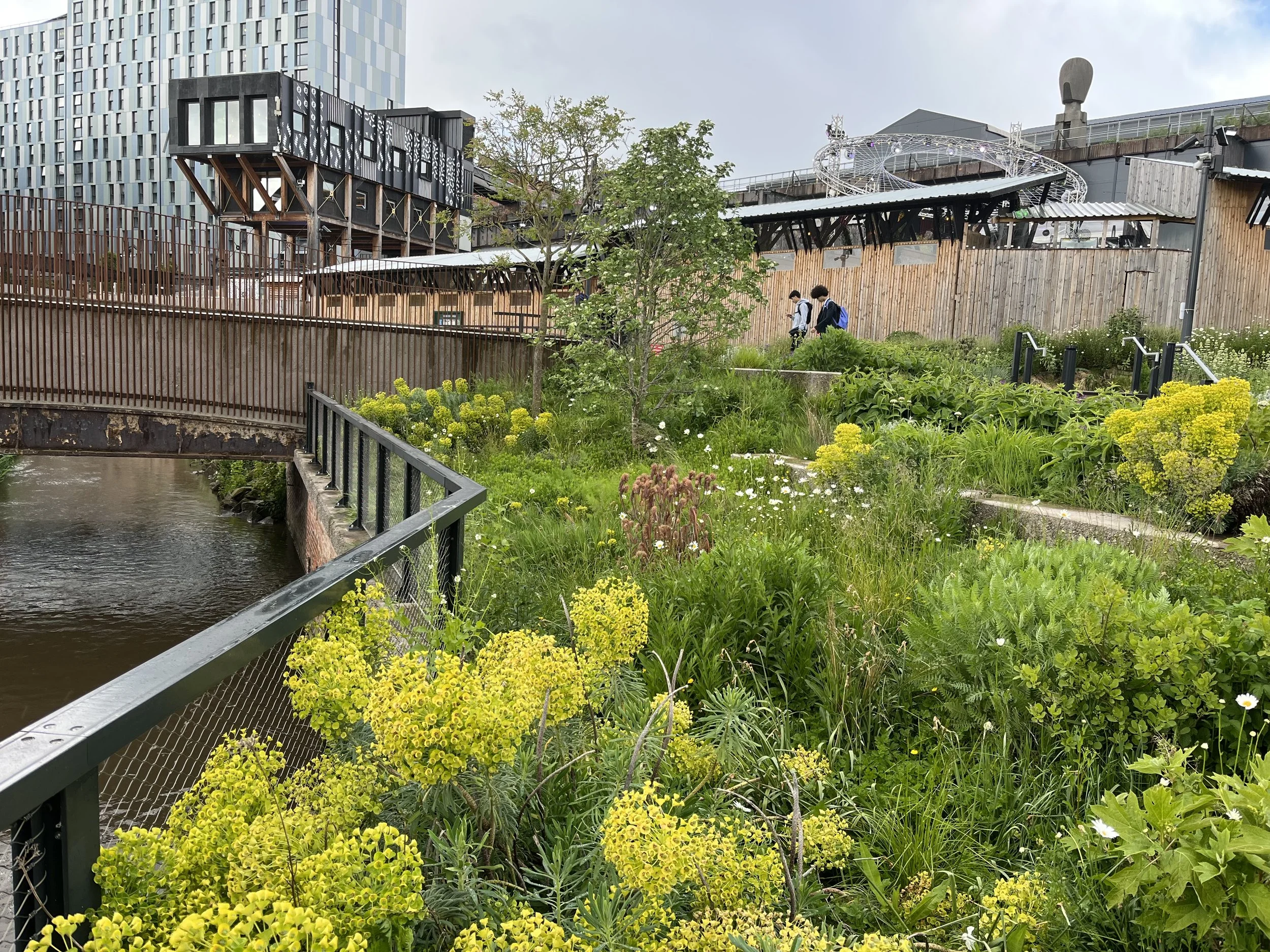
Mayfield Park
09:30-12:00 9th JulyFor the half-day excursion: A new 6.5-acre city park opened in 2022, featuring an array of different habitats, from lawns to woodlands to the banks of the River Medlock. The park has been constructed around historical Victorian industrial infrastructure to deliver multiple benefits, with over 300 new trees integrated into its design and wildflowers planted for biodiversity. This trip will return to the city centre by 12:00.
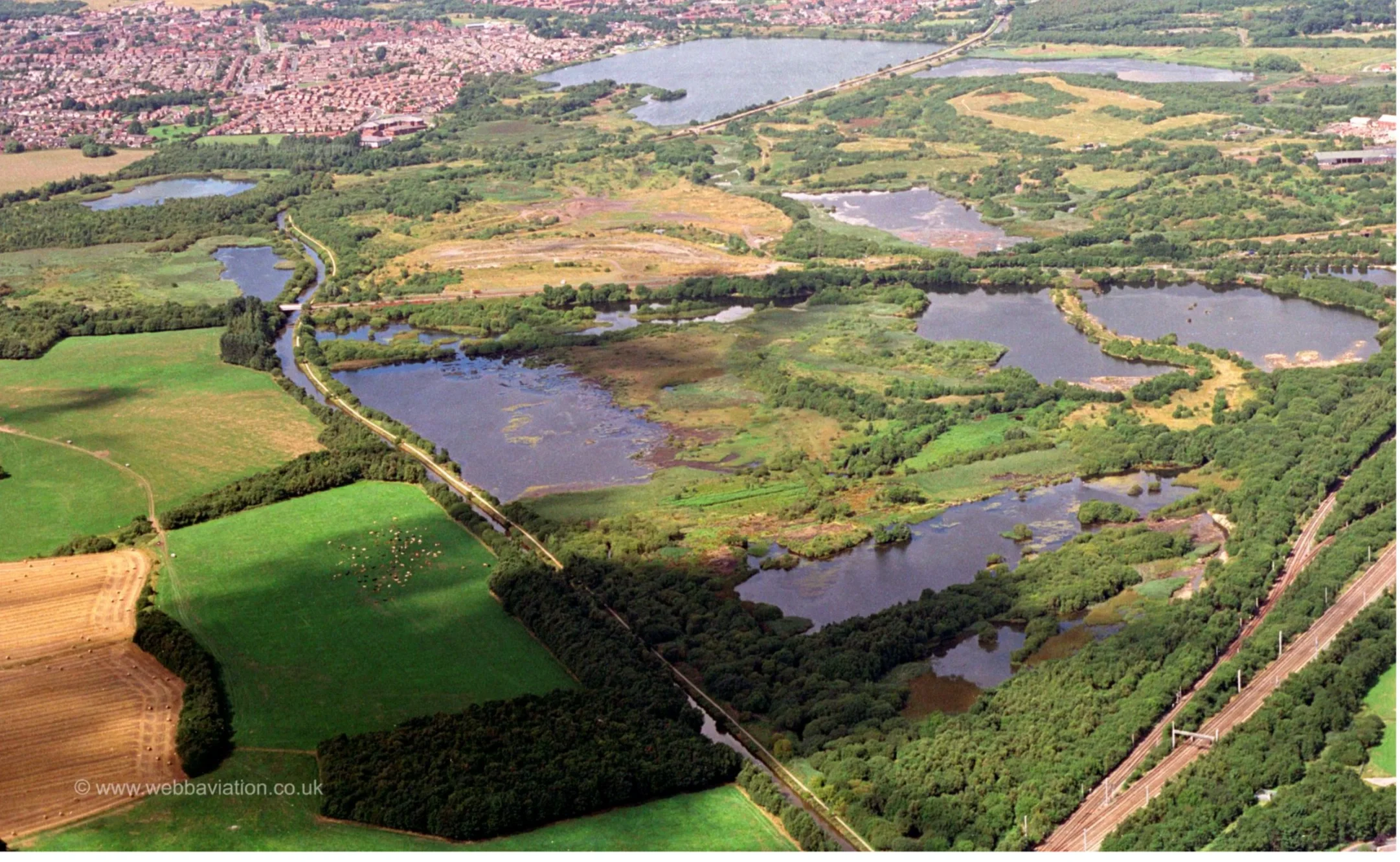
09:30-15:00 9th JulyBickershaw Country Park
For the full day excursion: A 247-hectare featuring grasslands, woodlands and scrublands, with 15 km of paths, and wetland areas for natural flood management, created through a multi-stakeholder partnership in recent years. We will see how a former industrial site has been transformed into a wildlife haven for nature and people. This trip will return to the city centre by 15:00.
Information for presenters
Abstract submission has now closed.
Thank you to those who submitted. We had unprecedented interest but have endeavoured to honour your preferences on presentation type. Presenters should register (below) by 1st June.
Following acceptance, oral presenters will be asked to submit a final 500-word abstract which will be published in our (online) conference proceedings. Poster presenters have the option to submit a pdf of their poster for inclusion in the proceedings.
Further information on the submission of posters and presentation slides will become available closer to the date.
Please direct questions to matthew.dennis@manchester.ac.uk
Registration
Conference fees include:
Entry to the full three-day event*
Conference dinner
Lunch and refreshments for three days
Two days of stimulating presentations and discussion
A field trip on day 3: either full-day at Bickershaw Country Park or half-day at Mayfield Park
Conference fees: non-students
Early-bird fees are available until 23:59 on 22 May 2026.
Early-bird member: £260.00
Early-bird non-member: £325.00
From 23 May 2026 registration fees will increase to:
Non-early member: £295.00
Non-early non-member: £375.00
*The day delegate rate is £195.00 for both members and non-members.
Conference fees: students
The rate for our student members is £165.00.
Please direct questions to matthew.dennis@manchester.ac.uk
Conference Organisers
The conference is organised by Prof. Jonny Huck and Dr Matt Dennis, and hosted by the Collective for Integrated Restoration, Conservation and Landscapes Ecology (CIRCLE).