
Event review: Emerging Voices April 2026
By Andrew Irving - Landscape Ecology UK Early Career Committee Representative
On 22nd April, coinciding with Earth Day, Landscape Ecology UK hosted a special ‘Emerging Voices’ edition of the Landscape Connections webinar series. As Student and Early Career Committee Rep, it was a real privilege to chair a session that brought together four speakers working across very different areas of ecology and landscape management, all united by the applied, pragmatic focus of their work.
At Landscape Ecology UK (LE-UK), we are committed to creating space for students and early career members across the full breadth of disciplines within landscape ecology. That means not only academic research, but also work grounded in policy, practice, and on-the-ground management. Events like this are one way we try to reflect that, giving people a platform to share ideas, test thinking, and connect with others working on similar challenges within our community and beyond.
The session itself was built around short ‘flash talks’, each followed by audience Q&A and discussion. Flash talks are a truly demanding format, requiring presenters to distil all the complexity, detail, and relevance of their research into concise, accessible insights. Whilst challenging, each excelled, giving a clear snapshot of four very different projects and approaches to novel landscape management questions. If you missed the session, you can catch up with the recording here.
Orestis Aslanidis, a PhD student at the University of Reading, opened with his work on recreational disturbance and bird populations in the New Forest National Park. His use of causal modelling examined how human movement interacts with landscape features and bird distributions. With visitor numbers in the New Forest continuing to rise, and an increasing desire to foster connection to nature, this work felt very timely for informing how recreation is managed in sensitive landscapes, and particularly where modelling can support mapping of habitat sensitivity and recreational pressures.
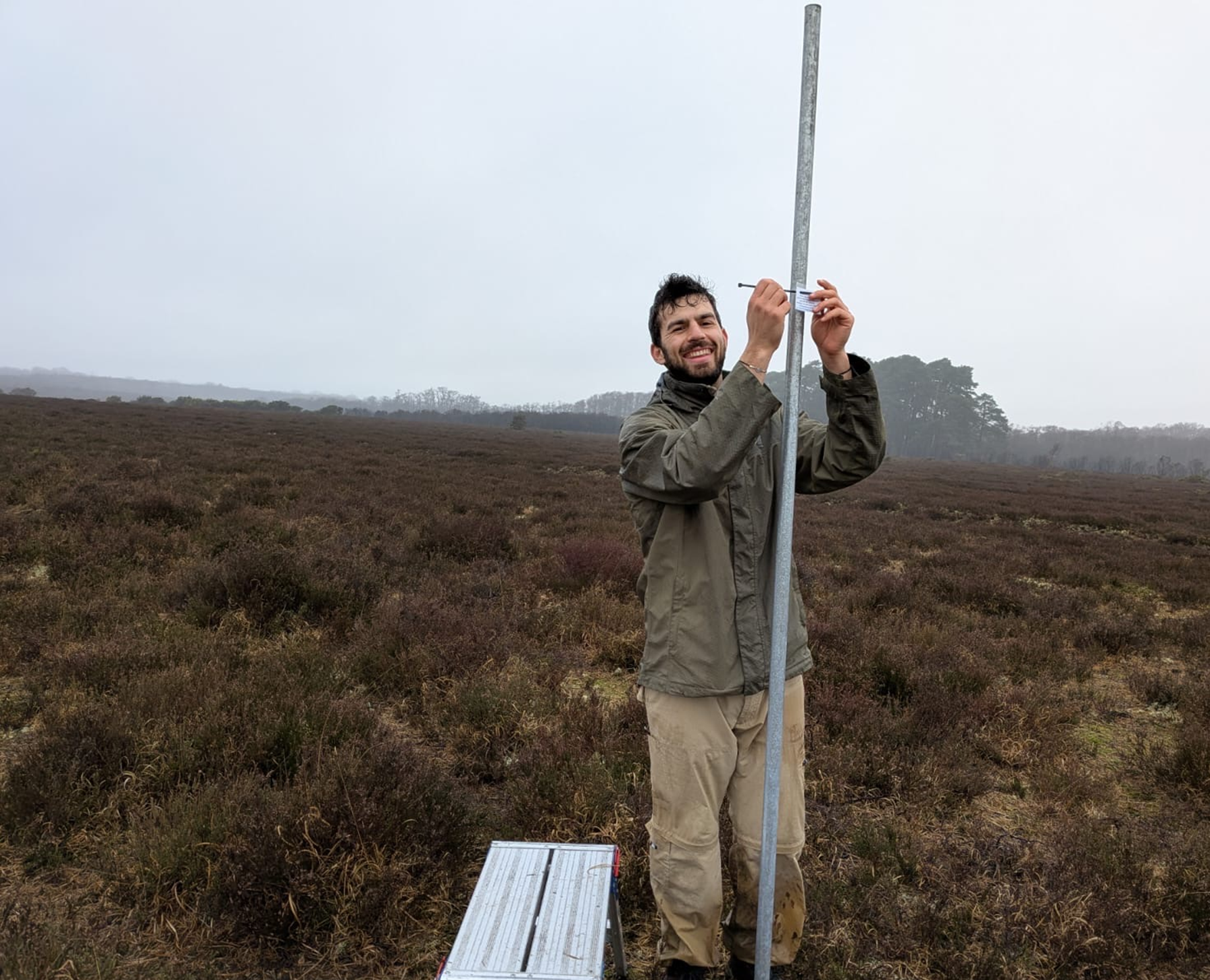
Image 1: Orestis setting up acoustic detectors as part of his fieldwork to monitor bird assemblages in the New Forest National Park.
Ben Wilson, a PhD student at the University of Stirling, then shifted the focus to forest management, exploring how moth communities respond to continuous cover forestry. Using moths as indicator species, his work compares more traditional rotational systems with alternative approaches that aim to support biodiversity alongside timber production. His early results, showing higher abundance in thinned and continuous cover stands, offer a useful contribution to ongoing discussions about how UK forests can be managed for resilience as well as productivity. Whilst working with a specialist focus on Lepidoptera, understanding species responses to alternative forestry approaches feels increasingly important as we collectively consider how best to integrate multifunctional land uses towards both production and biodiversity goals.
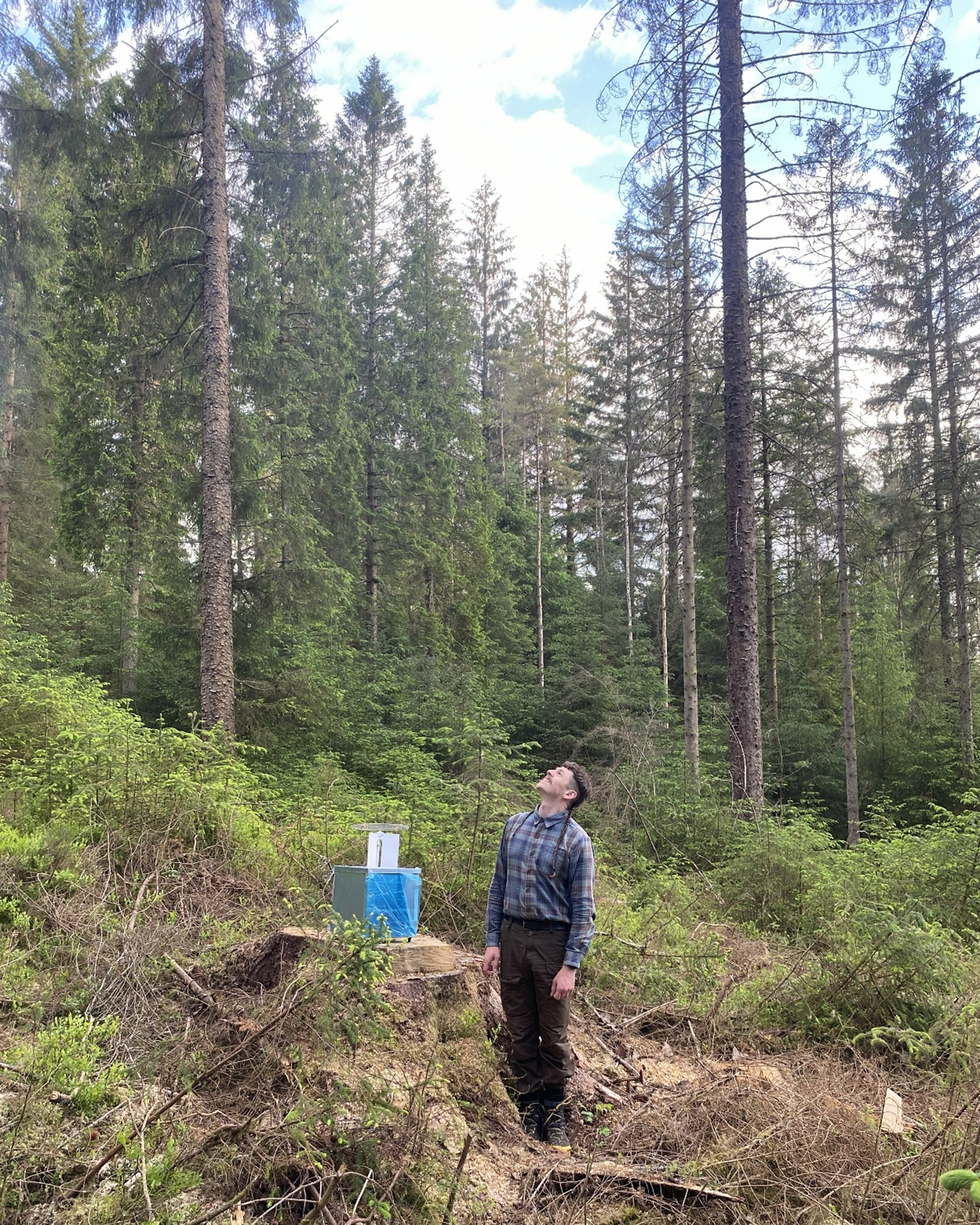
Image 2: Ben preparing for moth trapping in a monitored forest stand
“A core aim of the research has been to make findings accessible and relevant beyond academia, particularly for practitioners. Sharing my most recent project with the Landscape Ecology UK community felt like an ideal opportunity.”
– Ben Wilson
Dr Carmen Carmona, an early-career lecturer in soil science at the University of Stirling, demonstrated an expert perspective on soil and land management. Her research into using edible ectomycorrhizal fungi to support Scots pine establishment in grazing systems tackles the challenge of restoring degraded soils whilst providing diversification opportunities for farmers. Her emphasis on soils as living systems, and her aim to measure not just carbon or productivity, but wider ecosystem health, soil biodiversity, and tree survival are particularly compelling. This is a great example of research that is designed with both ecological and practical outcomes in mind.
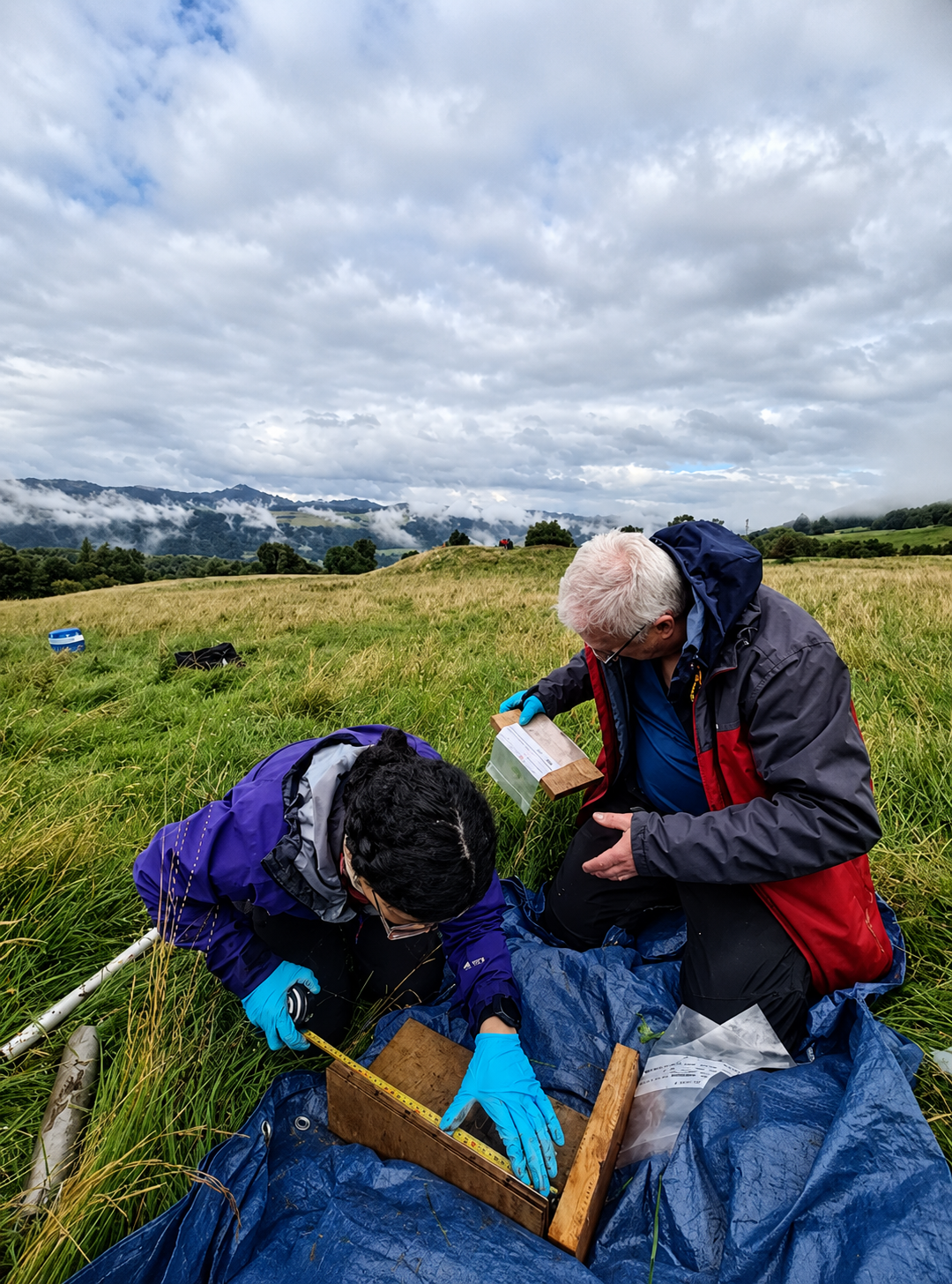
Image 3: Carmen taking baseline soil cores before planting the trial plots.
“Presenting at Landscape Ecology UK’s Emerging Voices webinar was a valuable opportunity to exchange ideas across disciplines in a genuinely supportive and friendly space.”
– Dr Carmen Carmona
Finally, Roshana Gautam, a PhD student at the University of Lincoln, presented her work on rewilding and rewetting in post-agricultural landscapes. By comparing field sites with different land-use histories, her research highlighted how starting conditions shape restoration trajectories over time. The clear differences in species composition and diversity between fields underlined an important takeaway: restoration is not one-size-fits-all, and understanding site history is critical to planning interventions and monitoring outcomes.
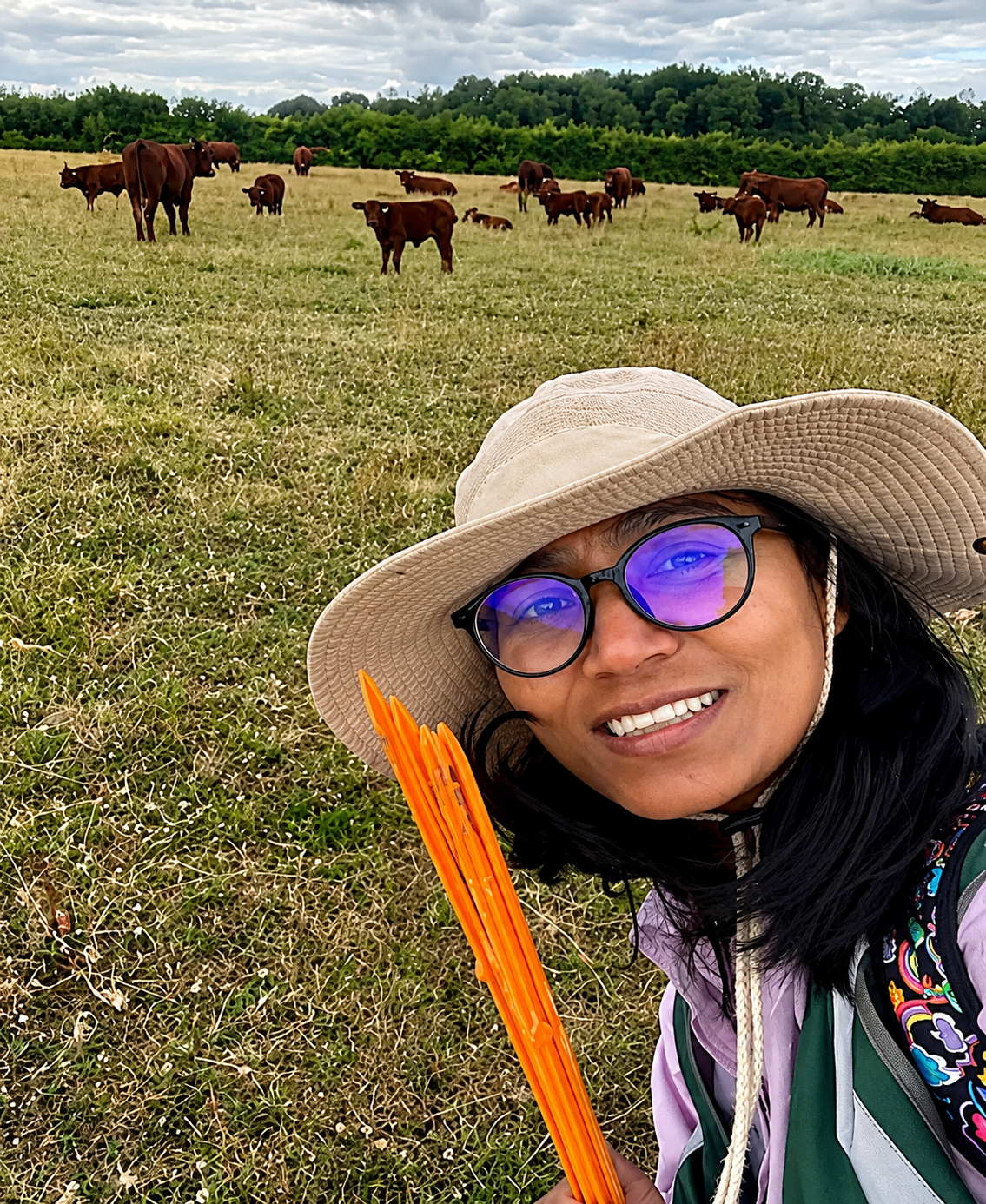
Image 4: Roshana on site at Wilder Doddington with the herd of resident Ecosystem Engineering Licolnshire Reds.
“Not every project has the funding to showcase research outcomes at conferences. Webinar series like this provide an excellent platform for students like me to present, share, and receive feedback on my work. Listening to a diverse range of projects from colleagues has been an enriching learning experience”
– Roshana Gautam
Want to get involved?
We will be running a second Emerging Voices session in September, and I would strongly encourage anyone considering presenting to get involved. It is a supportive space, and a valuable opportunity to connect your work with a wider community. We’d love to give a platform to students and early career researchers, practitioners, and policymakers – whether you’re interested in the ecological, physical, or social dynamics of landscape management. If this sounds like something you’re interested in, or you have wider thoughts on how LE-UK can support our student and early career members, get in touch with me at A.R.Irving@sms.ed.ac.uk
There is also still time to register for our annual conference in July, where the contributions of students and early career researchers and practitioners will be included throughout the event. If you are looking to share your work, meet others in the field, or simply get a sense of the breadth of activity across landscape ecology, it is well worth attending. Full details here!
If you are not yet a member or have been meaning to get more involved, now is a good time to join us. Landscape Ecology UK is built around its community, and creating opportunities like this depends on the support and enthusiasm of our members – we’d love to have you!
